
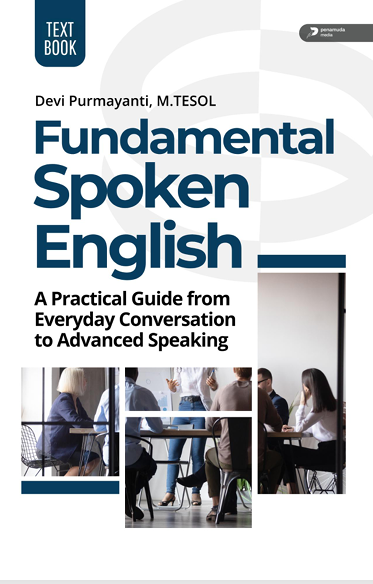
FUNDAMENTAL SPOKEN ENGLISH A PRACTICAL GUIDE FROM EVERYDAY CONVERSATION TO ADVANCED SPEAKING
Rp260.000 Original price was: Rp260.000.Rp149.000Current price is: Rp149.000.
Penulis :
Devi Purmayanti, M.TESOL
ISBN : 978-634-283-125-0
Jumlah Hlm : xiv + 377
Ukuran : 15 x23 Unesco
Kertas : Bookpaper
Tahun Terbit : 2026
Editor : Riandry Fadilah Nasution, M.A.
SINOPSIS
Fundamental Spoken English is a practical guide designed to help learners build confidence and fluency in everyday English communication. Starting with essential topics such as greetings, introductions, numbers, time, and daily routines, this book gradually leads learners toward more advanced speaking skills, including expressing opinions, making requests, handling complaints, discussing contemporary issues, and participating in meaningful conversations. Through clear explanations, useful expressions, model dialogues, vocabulary building, and interactive speaking activities, learners are encouraged to use English actively in real-life situations. Whether you are a student, teacher, or independent learner, this book provides a comprehensive pathway from basic communication to confident spoken English. Speak clearly. Communicate confidently. Connect globally.
Daftar Isi
CHAPTER 1 INTRODUCTION AND GREETING ………………………………….. 1
A. Introducing Yourself……………………………………………………………………………1
B. Introducing Others ………………………………………………………………………………3
C. Greeting…………………………………………………………………………………………………..4
D. Conversation………………………………………………………………………………………….4
E. Practise and Review…………………………………………………………………………….5
CHAPTER 2 ASKING AND INVITING…………………………………………………… 7
A. Asking Condition ………………………………………………………………………………….7
B. Asking Condition ………………………………………………………………………………….8
C. Conversation………………………………………………………………………………………….9
D. Practice and Review…………………………………………………………………………….9
CHAPTER 3 NUMBERS……………………………………………………………………….12
A. Cardinal Number ……………………………………………………………………………….12
B. Ordinal Number …………………………………………………………………………………13
C. Fraction Number ……………………………………………………………………………….15
D. Multiplicative Number……………………………………………………………………..15
E. Conversation……………………………………………………………………………………….15
F. Practice And Review…………………………………………………………………………16
CHAPTER 4 TIME AND DATE…………………………………………………………….18
A. Time………………………………………………………………………………………………………18
B. Date……………………………………………………………………………………………………….19
C. Conversation……………………………………………………………………………………….19
D. Practice And Review…………………………………………………………………………20
CHAPTER 5 ACTIVITIES IN DAILY ROUTINE ……………………………………22
A. Reading Passage…………………………………………………………………………………22
B. Example of Conversation…………………………………………………………………23
C. Practice & Review ……………………………………………………………………………..25
CHAPTER 6 SEASON & WEATHER…………………………………………………….28
A. The kinds of season in a SUBTROPICAL country ……………………..28
B. Example of Conversation…………………………………………………………………30
CHAPTER 7 DIRECTION …………………………………………………………………….32
A. Points of Compass……………………………………………………………………………..32
B. Asking for directions ………………………………………………………………………..32
C. Giving for directions …………………………………………………………………………32
D. Use prepositions of direction …………………………………………………………33
CHAPTER 8 TELLING A STORY………………………………………………………….35
A. What is telling a story? …………………………………………………………………….35
B. How to tell a story?……………………………………………………………………………35
C. Examples of story………………………………………………………………………………35
CHAPTER 9 DESCRIBING PLACE……………………………………………………….39
A. Describing a Place……………………………………………………………………………..39
B. New Vocabulary…………………………………………………………………………………39
C. Prepositions: Words That Show Position……………………………………40
D. There is / There are ………………………………………………………………………….41
E. How to Speak: Structuring a Good Description…………………………41
CHAPTER 10 WEATHER…………………………………………………………………….43
1. Adjectives Describing How the Weather Feels ………………………….43
2. Nouns Naming the Weather Condition………………………………………..44
3. Verbs What the Weather Does………………………………………………………. 45
4. Conversation……………………………………………………………………………………….47
5. Let’s Speak Up…………………………………………………………………………………….47
CHAPTER 11 MAKING SUGGESTION…………………………………………………48
A. Modals of Advice………………………………………………………………………………..48
B. Modals of Necessity…………………………………………………………………………..50
C. Conversation……………………………………………………………………………………….54
CHAPTER 12 MASTERING SPEAKING……………………………………………….55
A. Animal…………………………………………………………………………………………………..55
B. Food………………………………………………………………………………………………………57
C. Sport……………………………………………………………………………………………………..59
D. Transportation …………………………………………………………………………………..61
E. Earthday ………………………………………………………………………………………………67
F. Fashion…………………………………………………………………………………………………68
Chapter 13 EXPRESSING OPINIONS IN ENGLISH……………………………..70
A. What is an opinion?…………………………………………………………………………..70
B. How to Express Opinions in English…………………………………………….70
C. Types of Opinion Expression………………………………………………………….70
D. Strength of Opinions…………………………………………………………………………71
F. Let’s Speak Up! …………………………………………………………………………………..74
CHAPTER 14 AGREEING AND DISAGREEING IN ENGLISH
COMMUNICATION………………………………………………………………………………75
A. Introduction………………………………………………………………………………………..75
B. Expressions of Agreement, Disagreement, and Neutrality …….75
C. Introductory Phrases Before Expressing Your Opinion………….77
D. Follow-Up Discussion Questions …………………………………………………..79
E. Summary ……………………………………………………………………………………………..80
Chapter 15 STATING PREFERENCE…………………………………………………..81
A. Chapter Overview ……………………………………………………………………………..81
B. Introduction to Stating Preferences……………………………………………..81
C. Expressing Preference with “Would Rather”…………………………….82
D. Expressing Preference with “Prefer”……………………………………………85
E. Expressing Preference with “Had Better”…………………………………..86
F. Expressing Preference with “Would Sooner”…………………………….87
G. Expressing Preference with “Feel Like”………………………………………88
H. Formal and Polite Ways to Express Preference ………………………..88
I. Expressing Preference in Different Contexts……………………………..89
J. Common Errors and How to Avoid Them…………………………………..90
K. Comparative Overview of Preference Structures……………………..90
L. Practice Exercises ……………………………………………………………………………..91
G. Chapter Summary ……………………………………………………………………………..92
CHAPTER 16 STATING PREFERENCE & DESCRIBING YOUR WORLD
WITH SOPHISTICATION…………………………………………………………………….94
A. Chapter Overview ……………………………………………………………………………..94
B. Part 1: Understanding the Gap Standard vs. Advanced…………..95
C. Part 2: Core Language Techniques for Sounding Fancier……….95
D. Part 3: Upgraded Question and Answer Practice ……………………..99
E. Part 4: Stating Preference Language Focus …………………………….. 101
F. Part 5: Describing Places Advanced Vocabulary Bank…………. 103
G. Part 6: Common Mistakes to Avoid …………………………………………… 104
H. Part 7: Full Practice Dialogue Putting It All Together ………….. 105
I. Chapter Summary ………………………………………………………………………….. 107
J. End-of-Chapter Exercises…………………………………………………………….. 107
CHAPTER 17 HOW TO ASK FOR THINGS POLITELY AND NATURALLY
IN ENGLISH……………………………………………………………………………………… 109
A. Chapter Overview ………………………………………………………………………….. 109
B. Part 1: What Is a Request? …………………………………………………………… 110
C. Part 2: The Full Range of Polite Request Structures …………….. 110
D. Part 3: Grammar Reference Request Structures at a Glance. 115
E. Part 4: Shall, Can, and Will Offering Help………………………………… 116
F. Part 5: “Would You Like…?” Offering and Requesting………….. 117
G. Part 6: Refusing Requests Saying No Politely…………………………. 117
H. Part 7: Requests in Different Contexts……………………………………… 118
I. Part 8: Let’s Speak Up Practice Dialogues ……………………………….. 119
J. Part 9: Common Mistakes to Avoid …………………………………………… 121
K. Chapter Summary ………………………………………………………………………….. 122
L. End-of-Chapter Exercises…………………………………………………………….. 122
CHAPTER 18 EXPRESSING DISSATISFACTION POLITELY,
EFFECTIVELY, AND CONFIDENTLY ……………………………………………….. 124
A. Chapter Overview ………………………………………………………………………….. 124
B. Part 1: Why Complaining Is a Skill…………………………………………….. 125
C. Part 2: A Real-Life Situation The Dry Cleaner ………………………… 125
D. Part 3: The Three-Step Complaint Framework ……………………… 126
E. Part 4: Full Range of Complaint Expressions………………………….. 129
F. Part 5: Accepting a Complaint…………………………………………………….. 130
G. Part 6: Rejecting a Complaint……………………………………………………… 131
H. Part 7: Complaints in Different Contexts …………………………………. 132
I. Part 8: Let’s Speak Up: Personal Complaint Experience ……… 133
J. Chapter Summary ………………………………………………………………………….. 135
K. End-of-Chapter Exercises…………………………………………………………….. 135
CHAPTER 19 HOW TO PRESENT YOURSELF WITH CONFIDENCE,
CLARITY, AND PROFESSIONALISM ……………………………………………….. 137
A. Chapter Overview ………………………………………………………………………….. 137
B. Part 1: What Is a Job Interview?…………………………………………………. 138
C. Part 2: Before the Interview Preparation Is Everything ……… 139
D. Part 3: During the Interview Conduct and Body Language … 141
E. Part 4: After the Interview Closing Strongly…………………………… 142
F. Part 5: The Ten Most Common Interview Questions With
Model Answers……………………………………………………………………………….. 143
G. Part 6: Common Interview Mistakes to Avoid ……………………….. 149
H. Part 7: Useful Language for the Interview ………………………………. 150
I. Part 8: Let’s Speak Up Practice Questions……………………………….. 150
J. Chapter Summary ………………………………………………………………………….. 151
K. End-of-Chapter Exercises…………………………………………………………….. 152
CHAPTER 20 HOW TO NAVIGATE UNCOMFORTABLE QUESTIONS
WITH GRACE, CONFIDENCE, AND POLITENESS ……………………………. 154
A. Chapter Overview ………………………………………………………………………….. 154
B. Part 1: Why Some Personal Questions Are Considered
Inappropriate………………………………………………………………………………….. 155
C. Part 2: Examples of Inappropriate Personal Questions ………. 157
D. Part 3: How to Handle Uncomfortable Questions …………………. 158
E. Part 4: Intonation and Tone — The Hidden Layer of
Communication………………………………………………………………………………. 163
F. Part 5: Putting It All Together — Contextual Examples………. 164
G. Part 6: Let’s Speak Up — Discussion Topics …………………………… 165
H. Chapter Summary ………………………………………………………………………….. 166
I. End-of-Chapter Exercises…………………………………………………………….. 167
CHAPTER 21 HOW TO DISCUSS HUMAN CONNECTIONS WITH
DEPTH, NUANCE, AND NATURAL FLUENCY………………………………….. 169
A. Chapter Overview ………………………………………………………………………….. 169
B. Part 1: Understanding the Language of Human
Relationships…………………………………………………………………………………… 170
C. Part 3: How to Extend Your Answers — Speaking with Depth
and Substance…………………………………………………………………………………. 177
D. Part 4: Correlative Conjunctions — Building Sophisticated,
Balanced Sentences……………………………………………………………………….. 178
E. Part 5: Intonation and Tone When Discussing
Relationships…………………………………………………………………………………… 179
F. Part 6: Contextual Examples — Extended Answers
in Action……………………………………………………………………………………………. 180
G. Part 7: Let’s Speak Up — Discussion Topics …………………………… 181
H. End-of-Chapter Exercises…………………………………………………………….. 183
CHAPTER 22 HOW TO DISCUSS LEARNING, SCHOOLS, AND
ACADEMIC LIFE WITH CONFIDENCE AND FLUENCY ……………………. 186
A. Chapter Overview ………………………………………………………………………….. 186
B. Part 1: Understanding the Language of Education ……………….. 187
C. Part 2: Core Vocabulary — The Language of Education ……… 188
D. Part 3: How to Extend Your Answers — Compare and Contrast
193
E. Part 4: Intonation and Tone When Discussing Education…… 197
F. Part 5: Contextual Examples — Extended Answers in
Action………………………………………………………………………………………………… 198
G. Part 6: Let’s Speak Up — Discussion Topics …………………………… 199
H. Chapter Summary ………………………………………………………………………….. 201
I. End-of-Chapter Exercises…………………………………………………………….. 202
CHAPTER 23 HOW TO DISCUSS HEALTH, HABITS, AND WELLBEING
WITH FLUENCY AND CONVICTION………………………………………………… 205
A. Chapter Overview ………………………………………………………………………….. 205
B. Part 1: Understanding the Language of Health and Lifestyle 206
C. Part 2: Core Vocabulary — The Language of Health and
Healthy Living…………………………………………………………………………………. 207
D. Part 3: How to Extend Your Answers — The Listing
Strategy…………………………………………………………………………………………….. 211
E. Part 4: Intonation and Tone When Discussing Health …………. 215
F. Part 5: Contextual Examples — Extended Answers in
Action………………………………………………………………………………………………… 216
G. Part 6: Let’s Speak Up — Discussion Topics …………………………… 218
H. Chapter Summary ………………………………………………………………………….. 220
I. End-of-Chapter Exercises…………………………………………………………….. 221
CHAPTER 24 HOW TO DISCUSS THE DIGITAL WORLD WITH
PRECISION, DEPTH, AND ANALYTICAL FLUENCY ………………………… 223
A. Chapter Overview ………………………………………………………………………….. 223
B. Part 1: Understanding the Language of Technology…………….. 224
C. Part 2: Core Vocabulary — The Language of Technology …… 225
D. Part 3: How to Extend Your Answers — Cause and Effect….. 231
E. Part 4: Intonation and Tone When Discussing Technology… 235
F. Part 5: Contextual Examples — Extended Answers in
Action………………………………………………………………………………………………… 236
G. Part 6: Let’s Speak Up — Discussion Topics …………………………… 238
H. End-of-Chapter Exercises…………………………………………………………….. 240
CHAPTER 25 HOW TO DISCUSS THE POWER OF MEDIA AND THE
ART OF PERSUASION WITH SOPHISTICATION AND FLUENCY……. 243
A. Chapter Overview ………………………………………………………………………….. 243
B. Part 1: Understanding the Language of Media and
Advertising………………………………………………………………………………………. 244
C. Part 2: Core Vocabulary — The Language of Media and
Advertising………………………………………………………………………………………. 246
D. Part 3: How to Extend Your Answers — The Past-PresentFuture Strategy……………………………………………………………………………….. 253
E. Part 4: Intonation and Tone When Discussing Media and
Advertising………………………………………………………………………………………. 255
F. Part 5: Contextual Examples — Extended Answers in
Action………………………………………………………………………………………………… 256
G. Part 6: Let’s Speak Up — Discussion Topics …………………………… 259
H. End-of-Chapter Exercises…………………………………………………………….. 261
CHAPTER 26 HOW TO DISCUSS ONE OF THE WORLD’S MOST
URGENT CHALLENGES WITH CLARITY, DEPTH, AND
CONVICTION……………………………………………………………………………………. 264
A. Chapter Overview ………………………………………………………………………….. 264
B. Part 1: Understanding the Language of the Environment…… 265
C. Part 2: Core Vocabulary ……………………………………………………………….. 266
D. Part 3: How to Extend Your Answers — The AREA
Technique ………………………………………………………………………………………… 272
E. Part 4: Intonation and Tone When Discussing the
Environment……………………………………………………………………………………. 275
F. Part 5: Contextual Examples — Extended Answers in
Action………………………………………………………………………………………………… 276
G. Part 6: Let’s Speak Up — Discussion Topics …………………………… 278
H. Chapter Summary ………………………………………………………………………….. 280
I. End-of-Chapter Exercises…………………………………………………………….. 281
CHAPTER 27 HOW TO DISCUSS TRAVEL, TOURISM, AND THE JOY OF
EXPLORATION WITH FLUENCY, DEPTH, AND PERSONAL
CONVICTION……………………………………………………………………………………. 284
J. Part 1: Understanding the Language of Travel and Holidays284
A. Chapter Overview ………………………………………………………………………….. 286
B. Part 2: Core Vocabulary — The Language of Travel and
Holidays ……………………………………………………………………………………………. 287
C. Part 3: Bringing All Your Strategies Together………………………… 296
D. Part 4: Intonation and Tone When Discussing Travel………….. 298
E. Part 5: Contextual Examples — Extended Answers in
Action………………………………………………………………………………………………… 299
F. Part 6: Let’s Speak Up — Discussion Topics …………………………… 303
G. Chapter Summary: All Strategies at a Glance …………………………. 304
H. End-of-Chapter Exercises…………………………………………………………….. 306
CHAPTER 28 HOW TO DISCUSS THE ART OF CAPTURING MOMENTS
WITH FLUENCY, PERSONALITY, AND DEPTH ………………………………. 308
A. Chapter Overview ………………………………………………………………………….. 308
B. Part 1: Understanding the Language of Photography ………….. 309
C. Part 2: Core Vocabulary — The Language of Photography … 311
D. Part 3: Selecting and Combining Your Strategies — A Final
Review………………………………………………………………………………………………. 316
E. Part 4: Intonation and Tone When Discussing Photography 318
F. Part 5: Contextual Examples — Extended Answers in
Action………………………………………………………………………………………………… 319
G. Part 6: Let’s Speak Up — Discussion Topics …………………………… 322
H. Chapter Summary ………………………………………………………………………….. 324
I. End-of-Chapter Exercises…………………………………………………………….. 325
CHAPTER 29 HOW TO EXPRESS THE FULL RANGE OF HUMAN
EXPERIENCE WITH AUTHENTICITY, COLOUR, AND IDIOMATIC
FLUENCY …………………………………………………………………………………………. 328
A. Chapter Overview ………………………………………………………………………….. 328
B. Part 1: Understanding the Language of Emotion…………………… 329
C. Part 2: Core Vocabulary — The Language of Emotion…………. 331
D. Part 3: Selecting and Combining Your Strategies for Emotional
Topics………………………………………………………………………………………………… 344
E. Part 4: Intonation and Tone When Discussing Emotions ……. 346
F. Part 5: Contextual Examples — Extended Answers
in Action……………………………………………………………………………………………. 347
G. Part 6: Let’s Speak Up — Discussion Topics …………………………… 349
H. End-of-Chapter Exercises…………………………………………………………….. 351
CHAPTER 30 How to Discuss the Skies Above Us with Precision,
Personality, and Analytical Depth………………………………………………… 354
A. Chapter Overview ………………………………………………………………………….. 354
B. Part 1: Understanding the Language of Weather ………………….. 355
C. Part 2: Core Vocabulary — The Language of Weather and
Climate………………………………………………………………………………………………. 356
D. Part 3: Describing Your Favourite Weather — A Model
Extended Response……………………………………………………………………….. 363
E. Part 4: Selecting and Combining Your Strategies for Weather
Topics………………………………………………………………………………………………… 365
F. Part 5: Intonation and Tone When Discussing Weather ……… 365
G. Part 6: Contextual Examples — Extended Answers in
Action………………………………………………………………………………………………… 366
H. Part 7: Let’s Speak Up — Discussion Topics …………………………… 370
I. End-of-Chapter Exercises…………………………………………………………….. 372
BIBLIOGRAPHY………………………………………………………………………………. 375
AUTHOR BIOGRAPHY…………………………………………………………………….. 376
Produk Serupa
Related products
-
Sale!

ARSITEKTUR TROPIS DAN KENYAMANAN TERMAL
Rp98.000Original price was: Rp98.000.Rp80.000Current price is: Rp80.000. -
Sale!

IT GOVERNANCE
Rp98.000Original price was: Rp98.000.Rp80.000Current price is: Rp80.000. -
Sale!

MANAJEMEN FARMASI
Rp98.000Original price was: Rp98.000.Rp80.000Current price is: Rp80.000. -
Sale!

PENGANTAR ILMU KIMIA
Rp98.000Original price was: Rp98.000.Rp80.000Current price is: Rp80.000. -
Sale!

E-COMMERCE
Rp98.000Original price was: Rp98.000.Rp80.000Current price is: Rp80.000. -
Sale!

BIOLOGI DASAR
Rp98.000Original price was: Rp98.000.Rp80.000Current price is: Rp80.000.